Transponder, Sidewinder and Smart Keys: A Plain-English Guide to the Key in Your Pocket
Knowing which kind of key you carry makes every conversation with a locksmith shorter and every replacement less of a surprise.
September 30, 2026 · 4 min read
Car keys used to be simple. A piece of metal with teeth on it opened the door and started the engine. Today the thing in your pocket might be that, or it might be a chunky key with a chip in it, or a fob you've never actually put into anything. They all look like keys and they're very different to replace.
Edge-cut keys: the classic
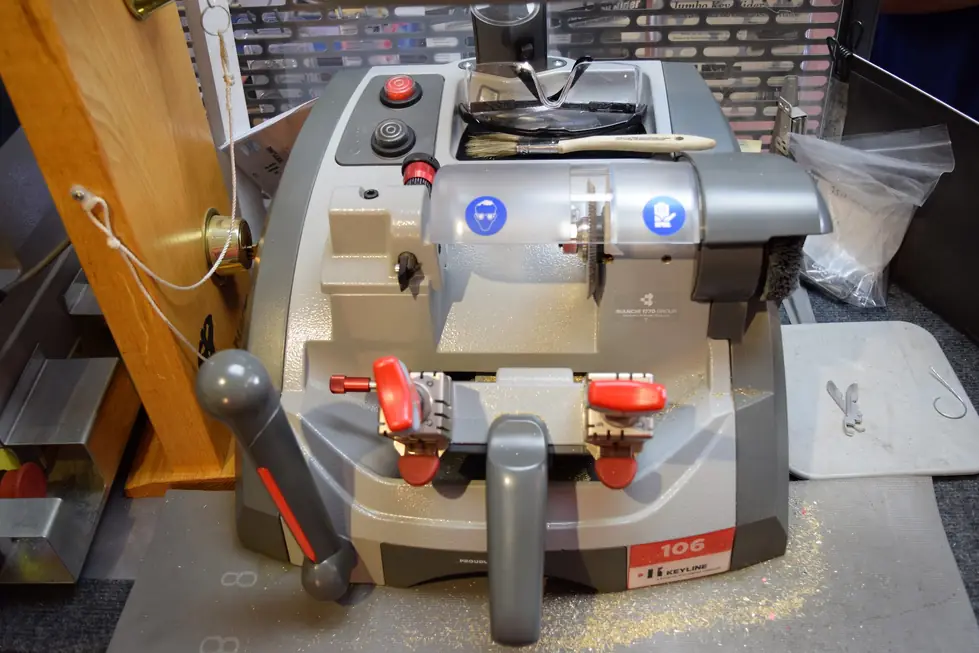
An edge-cut key has teeth along one or both edges of the blade. It's what most people picture when they think of a key, and what your house keys almost certainly are. Because the cuts are on the edge, they can be copied on a standard key machine that traces the original.
On older vehicles this is the whole story. Cut the blade right and the car starts. If your car is from before the chip era and still uses a plain metal key, copying it is about as simple as car keys get.
Sidewinder keys: high security cuts
A sidewinder key, also sold as a high-security or laser-cut key, looks different. Instead of teeth on the edge, it has a winding groove milled into the flat face of the blade, usually thicker than a standard key. The path of that groove is what the lock reads.
These are harder to copy casually and they need a different machine. A locksmith cuts them either by tracing an existing key on the right equipment or by cutting to a code. That's part of why they can't be duplicated at the same counter as a house key. All Points Locksmith lists high-security and sidewinder keys among what it handles, and says it keeps thousands of keys in stock.
Transponder keys: the chip inside
A transponder key has a small chip built into the plastic head. The blade may be edge-cut or sidewinder, but the chip is a separate layer of security. When you turn the key, the car sends a signal and the chip replies with a code. No matching code, no start.
This is why a cut blade alone isn't enough on most newer cars. The chip has to be programmed to your vehicle with diagnostic equipment. A blade without a programmed chip might turn in the door but won't keep the engine running. If you've ever had a key that opens the car and then dies a second after starting, that's usually what you were seeing.
Smart keys and fobs
A smart key is a fob that talks to the car without being inserted anywhere. You carry it in a pocket or bag, the doors unlock when you touch the handle, and a push button starts the engine. Inside is a radio and a battery, and most have a thin emergency blade hidden in the body that slides out for a dead-battery situation.
Smart keys are the most involved to replace because the fob has to be cut, if it has a blade, and programmed to the car. Used or online replacements can be a gamble. Some fobs are locked to their original vehicle and can't be reused, and a fob that looks identical may not be compatible with your exact model year. It's worth asking a locksmith before buying one.
Dead battery or lost programming?
When a fob stops working, the cause is usually one of two things, and the fix is very different. A weak battery shows up gradually. The range shrinks, you have to press a button two or three times, or the dash shows a message that the key wasn't detected. Most fobs run on a small coin-style battery that's inexpensive to swap, and your owner's manual will show how to open yours.
Many cars also have a backup way to start with a dead fob, such as holding it against the start button or placing it in a marked slot. Check the manual before you need it. If a fresh battery doesn't change anything, or a brand-new fob does nothing at all, the problem is likely programming rather than power. That's the point to call a locksmith instead of buying a third battery.
Why knowing your key type helps
When you call about a key, the first questions are what the car is and what kind of key it uses. If you already know you have a transponder key or a smart fob, you can skip the guessing, and the locksmith can tell you right away what equipment the job needs. A quick look at the key itself, at the head of the blade and whether there's a button, usually answers it.
All Points Locksmith programs keys and fobs and says it can unlock and make keys for about 95% of cars on the road. If you're in Kennewick, Pasco or Richland and you're not sure what you're holding, call (509) 585-2407. Emergency Mobile Service runs 7am to 10pm, Monday through Saturday, and the shop at 3902 W Clearwater Ave, Suite 101 is open weekdays from 8:30am to 5:30pm and Saturday from 9am to 3pm.
All Points Locksmith, (509) 585-2407
Call (509) 585-2407More articles
Locked Out or Lost Your Only Car Key in the Tri-Cities? Here's What Happens Next
Losing your only car key feels like an emergency, and knowing the steps ahead of time makes the call to a locksmith a lot easier.
Rekey or Replace? What to Do With the Locks After You Buy a House
Before the moving boxes come in, the locks deserve a look, because the keys to your new house may be in a lot of other people's hands.