Door Hardware for Kennewick Businesses: Panic Bars, Access Control, Key Control and Safes
Each piece of commercial hardware solves a different problem, and most security gaps come from using the wrong one or forgetting to update it.
September 30, 2026 · 3 min read
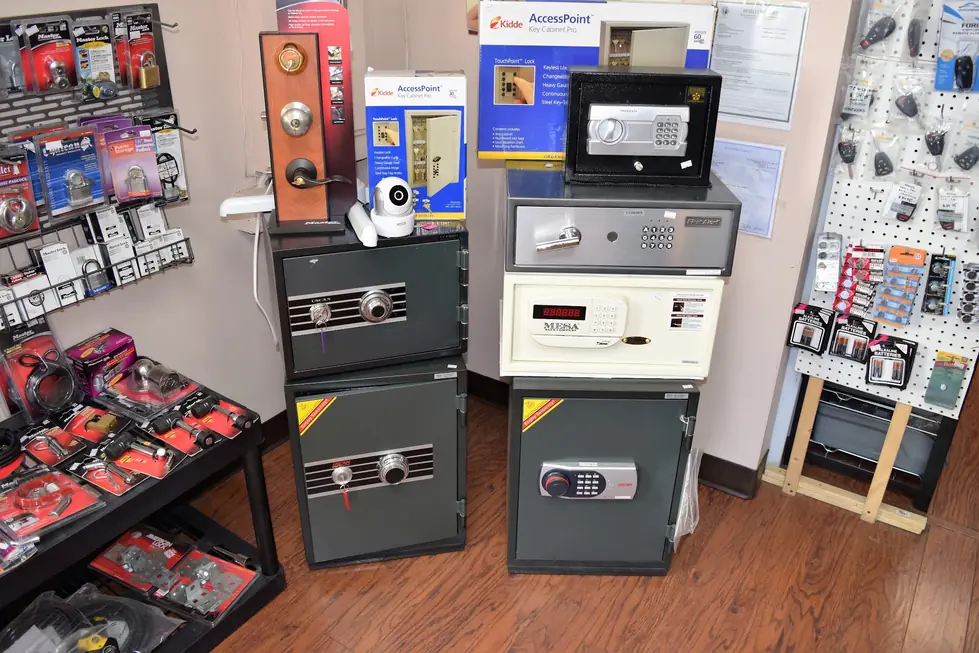
A business door has two jobs that pull in opposite directions. It has to let the right people in and let everyone out quickly, and it has to keep everyone else outside. Most commercial hardware exists to balance those two jobs. Knowing what each piece is for helps you ask better questions and notice gaps before they cost you something.
Panic bars: built for getting out
A panic bar, sometimes called an exit device, is the horizontal bar across the inside of a door. Push it and the door opens. You don't need a key or a knob, and that's the entire point: in an emergency nobody should have to think about how to leave the building.
From the outside, the same door can stay locked or be opened with a key or a trim handle. Things worth checking: the bar should move easily, the door should latch fully when it closes, and nothing should be chained, blocked or locked on the inside. Exit doors are also something inspectors look at, so if you're unsure whether your setup is acceptable, ask your local fire marshal or building inspector rather than guessing.
Access control: who gets in, and when
Access control replaces or adds to keys with something you can manage: a keypad code, a card or a fob that a reader recognizes. The big advantage is that each person can have their own credential. When someone leaves, you turn off their credential instead of hunting down a key that might have been copied.
Some systems also keep a record of which credential opened which door and when. That can be useful for spotting patterns, like a back door that keeps being used at odd times. Ask two plain questions before you buy: what happens to the door when power goes out, and who can change the settings? A good installer will answer both without hedging.
Key control: keeping track of the keys you have
Even with electronic locks, most businesses still have keys somewhere: the back door, the supply room, the office. Key control is the habit of knowing who holds what. Keep a simple log of who has been given each key and when. Stamp keys with a code instead of the name of the door, so a lost key doesn't label itself.
Restricted keyways add another layer. Keys for these locks can't be duplicated at a hardware store counter and usually need authorization to copy. That doesn't stop every copy, but it stops the casual one. If your keys say Do Not Duplicate, know that it's a request, not a barrier, and a restricted system does more.
Safes: match the safe to the risk
Safes are built for different threats, and the words fire and security aren't interchangeable. A fire safe is meant to protect paper, like contracts and records, from heat. A security safe is meant to slow down someone trying to get in, and it's the better choice for cash and valuables. Some models try to do both, so check what a safe is actually rated for instead of assuming.
Two habits help. Anchor the safe so it can't be carried away, and keep track of who knows the combination or code. If a combination is forgotten or a lock fails, opening a safe without damaging it is a specialist job. All Points Locksmith lists opening safes among its commercial services, alongside panic bars and access control.
When staff leave, update the locks
People leave, and a key or code outlives the job. Rekeying the affected locks is often the cleanest answer, because it makes every key that was out there useless at once. You don't always need to replace the whole door. Consider this short routine any time someone with access moves on.
- Collect every key, fob and card, and check them against your log
- Disable their access credential and change any shared keypad code
- Rekey the locks they had keys for if any key is unaccounted for
- Change the combination on any safe they could open
- Note the date and what you changed, so the next turnover is easier
All Points Locksmith describes its commercial work as everything from installing panic bars to access control to opening safes, and says it is fully licensed, bonded and insured. The shop at 3902 W Clearwater Ave, Suite 101 in Kennewick serves businesses in Kennewick, Pasco and Richland and is open Monday through Friday from 8:30am to 5:30pm and Saturday from 9am to 3pm. Call (509) 585-2407 to talk through your doors.
All Points Locksmith, (509) 585-2407
Call (509) 585-2407More articles
Locked Out or Lost Your Only Car Key in the Tri-Cities? Here's What Happens Next
Losing your only car key feels like an emergency, and knowing the steps ahead of time makes the call to a locksmith a lot easier.
Rekey or Replace? What to Do With the Locks After You Buy a House
Before the moving boxes come in, the locks deserve a look, because the keys to your new house may be in a lot of other people's hands.